Blackjack’s simplicity makes it a mainstay in casinos, but behind this simplicity lies hidden depth. The game revolves around the concept of approaching the all-important score of 21, but knowing when to hit and when to quit is easier said than done.
Understanding the concept of hitting and when you should hit forms the basis of all poker strategies. It’s a concept all players will have some thoughts about, whether offering sage advice or ideas founded in superstition or misunderstanding of chance.
Separating fact from fiction, we want to explore the core components of when to hit in blackjack. Whether learning the basics of the game or seeking to personalise your strategy, keep this page in mind, and you can avoid experiencing a blackjack pitfall.
Why Hit in Blackjack?
The goal of blackjack is to either reach a score of 21 or get closer to a score of 21 than the dealer, without going over. When a round of blackjack begins, you’ll be given two cards, and the dealer will be given 1. Your cards have their scores added together to create a total.
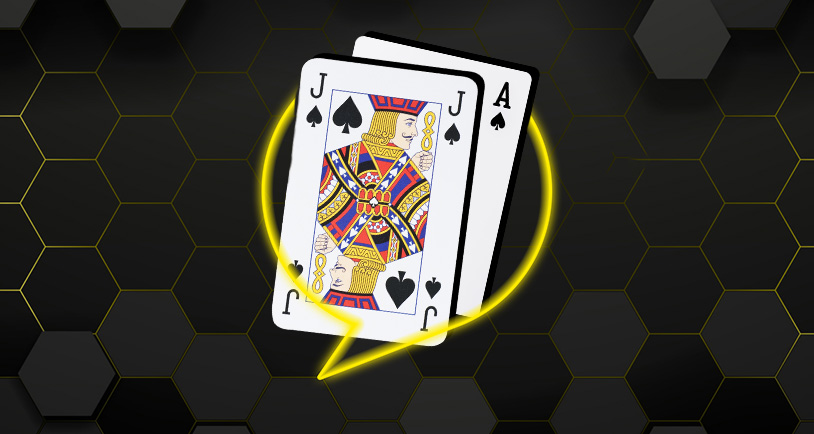
Cards from 1-10 have the same score as their number. The picture cards of Jack, Queen, and King all have a score of 10. The ace can have a score of either 1 or 11. It is possible in the first hand of blackjack to end up with a score of 21 with an ace and a 10-point card. If you don’t achieve this score, you can then hit to receive another card.
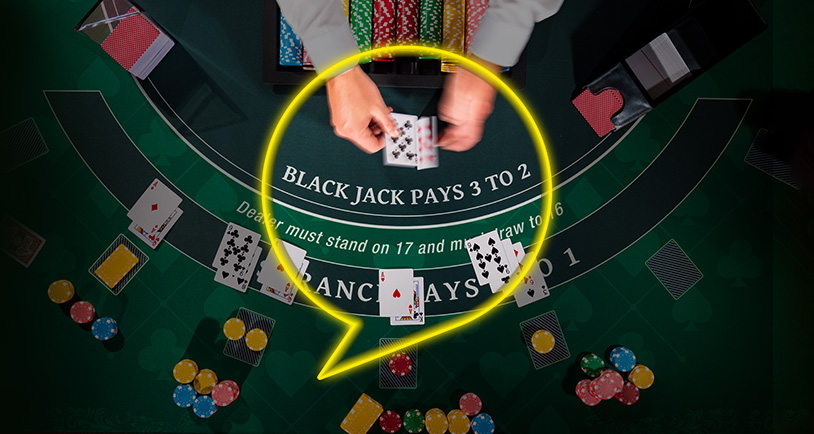
Hitting will add more points to your score total, hopefully bringing you closer to 21 without going over. If you do go over, you have lost the round. You can also stand, which means you can no longer hit. When you stand, the dealer will then keep drawing if they have a score of 16 or lower. If the dealer has 17 or more, they must stand. If the dealer goes over 21, they lose.
The point of this is to ride the balancing point between risk and reward, predicting when it’s a good idea to hit, and understanding when hitting is too risky to attempt. Because we already know all of the possible cards in a deck, blackjack makes it fairly easy to understand the odds.
Understanding the Odds
A single suit in blackjack has 1 card worth 1 or 11 points (the ace), a card each worth 2-9 points (the associated number cards), and 4 cards worth 10 points (the 10 and picture cards). This gives players some ideas of the odds they face when they decide to hit.
If you have an initial draw score of 19, for example, then hitting and drawing another card would be statistically likely to put you over 21 and cause a bust, because most cards are worth more than 2 points. On the other hand, if you draw a hand of 8, then you can hit without concern because no single card is worth more than the 14 points it would take to cause a bust.
Knowing when to hit is about wagering the risk against the likelihood of luck. What does the dealer have, how likely are they to bust if they have to draw, and what are your odds versus them if you hit? It’s a personal question and one based on chance.
You can also look to basic blackjack strategy charts which relay the best possible odds in every situation blackjack can provide. These charts use statistical calculation to guide players, so they’re a solid basis for understanding what might work. Just be aware that the house still has an edge, so charts are also in no way a guaranteed method for winning.
Overcoming Bias and Superstitions
Gambling is full of incorrect ideas about how odds work. This occurs because our brains are naturally wired to detect patterns, but our ability to understand patterns is flawed. We’re susceptible to bias and superstitions, and this can lead us to chase dangerous paths. Remember that there is no magical way to ensure an edge over the house, it’s all a matter of chance.
There’s also a risk of being caught up in a bad situation, where it’s difficult to reduce play. We’ve developed our Safer Gambling Portal for just this reason, to help keep our players safe. From questionnaires to detect problems to guidance and self-exclusion tools, visit this part of our website for a whole host of useful information.
Forming Your Personal Strategy
Once you understand the odds and how to play, knowing when to bet in blackjack is all about developing your personal strategy. Are you the type of player who wants to take big swings, or do you prefer to keep bets small to try to find success in the little victories? As long as you’re playing safely, there are no wrong answers.
You might also consider working with special online casino bonuses, which can add bonus cash to your online account. To bet more for less, these features can be a great way to explore what’s on offer.
18+ | Opt in | T&Cs apply | begambleaware.org | Please gamble responsibly.
FAQ
Is there a way to guarantee a win in blackjack?
There is no way to guarantee a win in online blackjack. Like all casino games, online blackjack is built on the idea of luck. Though there are ways to make wins more likely, they’re never completely reliable.
Which strategies will help me win in blackjack?
Relying on basic blackjack strategy charts can help minimise the house edge, but this will not ensure a win. Strategies in blackjack should be thought of as alternative ways to have fun, rather than as ways to transform your odds.
Does card counting work in online blackjack?
Card counting will generally not work in online casinos because of how randomness works. Online casinos will tend to shuffle their decks between hands, which means keeping track of played cards will be pointless and not provide an advantage.
Is the signal to hit always the same?
The general hit signals can vary depending on region, but they usually involve gently tapping on the table or pointing to your cards with your index finger.