Blackjack, also known as 21, is a staple in both traditional and online casinos. Famed for its combination of skill and chance, blackjack offers players a thrilling gaming experience and a chance to test their strategy against the dealer.
Understanding the Basics
At its heart, blackjack is a game of comparison between players and a dealer. Number cards (2-10) are worth their face value. Kings, Queens, and Jacks are each worth 10 points. Aces can be worth either one or 11 points, depending on what favours the hand more.
The goal is to have a hand value closer to 21 than the dealer without exceeding it. Players are dealt two cards, both face up. The dealer receives one card face up (known as the upcard) and one face down (the hole card).
Players decide whether to ‘Hit’ (take another card) or ‘Stand’ (stick with their current hand). They can also ‘Double Down’ (double their bet and receive only one more card) or ‘Split’ (divide two cards of the same value into separate hands). Once players are done, the dealer reveals the hole card. Dealers typically hit until their hand is worth 17 or more.
Blackjack Payouts: Understanding Your Returns
In blackjack, different outcomes have different payout rates, which can influence your potential returns. While these can vary slightly depending on the casino’s rules and number of decks in play, some standard payouts include:
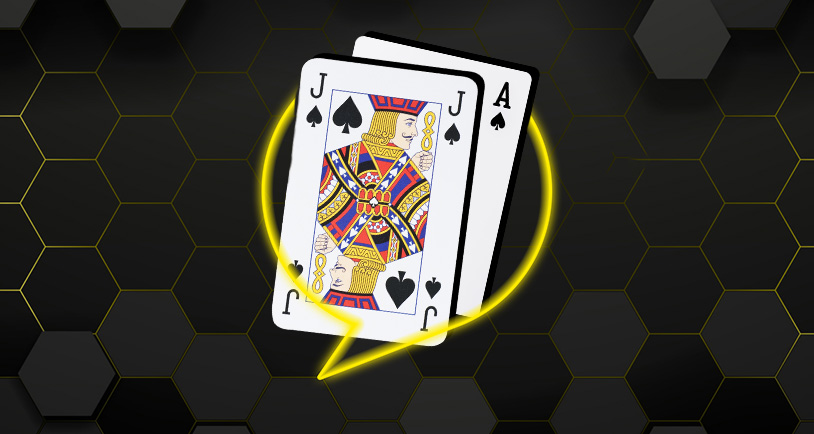
- Blackjack: If you’re dealt an Ace and a 10-value card (10, Jack, Queen, or King) on your initial two cards, this is a blackjack. The standard payout for a blackjack is 3:2, meaning for every £2 you bet, you’d receive £3 in return.
- Winning Hand: If you beat the dealer without a blackjack, the standard payout is even money, or 1:1. This means if you bet £10, you’d receive £20 back (your £10 bet plus £10 in winnings).
- Insurance: If the dealer’s upcard is an Ace, players have the option to take out ‘insurance’ against the dealer having a blackjack. The payout for an insurance bet is typically 2:1. If the dealer does have a blackjack, you’ll break even on the hand (losing your original bet but winning the insurance bet).
- Push: If both the player and the dealer have the same hand value, the hand is a ‘push’, and the player’s bet is returned with no additional winnings.
- Double Down: If a player chooses to double their initial bet in exchange for one more card (and only one more), potential winnings are also doubled. If you double down and beat the dealer, you receive 2:1 on your original bet.
It’s crucial to understand these payouts to strategise effectively and know what to expect from your bets. As always, the primary goal should be enjoyment. To ensure a responsible approach to gaming, consider visiting the Safer Gambling Portal.
Blackjack Side Bets
Side bets in blackjack offer additional betting opportunities and can increase the excitement of the game. Here are some popular side bets and how they work:
Perfect Pairs
When you place a bet on Perfect Pairs, you’re betting that your first two cards will be a pair. The payouts vary depending on the kind of match you get with a mixed pair (different suits) paying out at 6/1, a coloured pair (same colour, different suits) at 12/1 and a perfect pair (identical cards) paying 25/1.
21+3
This bet combines your first two cards and the dealer’s upcard. You’re wagering that this three-card hand forms a straight, flush, three-of-a-kind, or straight flush. A flush (all same suit) pays out at 5/1, a straight (in numerical sequence) at 10/1, three-of-a-kind (same value) at 30/1, and finally, a straight flush (numerical sequence and same suit) pays at 40/1.
Blackjack Strategies: Enhancing Your Gameplay
Blackjack, while rooted in chance, offers strategic depth that can potentially influence the outcome. Here are some prominent strategies players use to navigate the game:
Basic Strategy
Basic Strategy is a mathematically derived system which outlines the best possible action (whether to hit, stand, double down, or split) for every possible hand a player can have against any possible dealer upcard. Following this strategy can reduce the house edge to less than 1% in many variations of blackjack, making it one of the most effective tools for players.
Card Counting
A method where players keep track of the ratio of high to low-value cards remaining in the deck or shoe. High cards (10s and Aces) are beneficial to the player, while lower-value cards favour the dealer. By adjusting your bets and actions according to the count, you can potentially gain an edge over the house.
There are various systems, like the hi-lo method, where every card is assigned a value. Players then keep a “running count” and adjust their bets accordingly. It’s worth noting that while card counting is legal, casinos frown upon it and might ask persistent counters to leave.
Making the Most of Your Blackjack Experience
Here at talkSPORT BET we frequently roll out enticing promotions and offers tailored for blackjack enthusiasts. Before immersing yourself in these special deals. To stay updated with our freshest promotions, have a glance at our offers page.
18+ | Opt in | T&Cs apply | begambleaware.org | Please gamble responsibly
Blackjack FAQs
What happens if both the player and dealer have the same hand value?
This is called a push. Neither the player nor the dealer wins, and the player’s bet is returned.
What is a Blackjack?
A Blackjack is an Ace and a 10-point card (10, Jack, Queen, King) as the first two cards. It’s the best possible hand and typically pays 3:2.
Can I play blackjack online against real dealers?
Yes! talkSPORT BET offers Live Blackjack, where you play in real-time against professional dealers via video stream.
What does insurance mean in blackjack?
Insurance is a side bet offered when the dealer’s upcard is an Ace. If the dealer has a Blackjack, the insurance bet pays 2:1.